
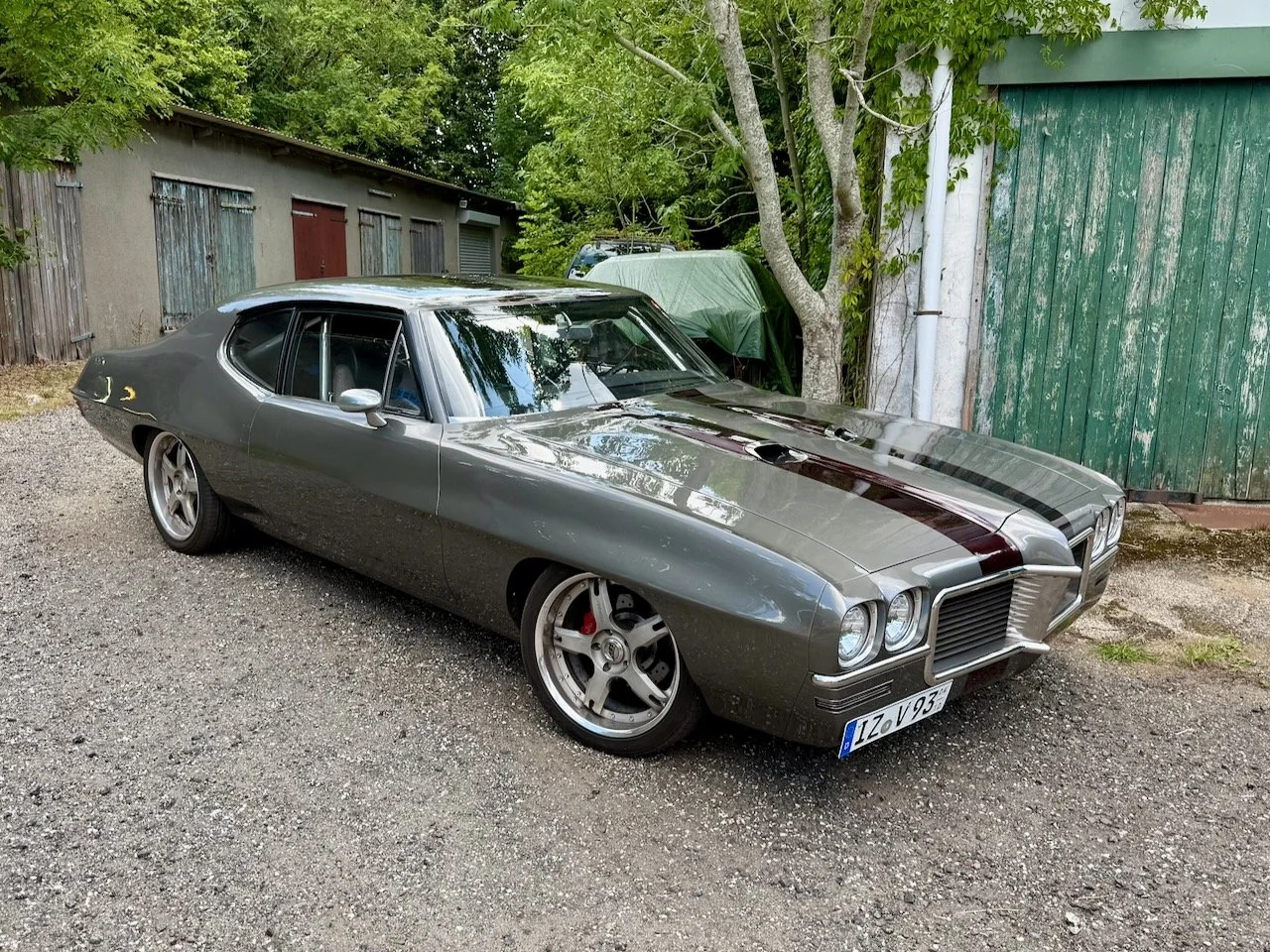
Happy Birthday, LeSupra!
Ende 2006. Zwanzig Jahre ist das jetzt her. Wenn mir damals jemand gesagt hätte, dass der »LeSupra« zwei Jahrzehnte später nicht nur immer noch lebt, sondern radikaler und kompromissloser ist als je zuvor, hätte ich wohl nur wehmütig gelächelt. Denn seien wir ehrlich: Die meisten dieser Umbauten sterben irgendwann einen stillen Tod in irgendeiner Scheune.
Ende 2006. Zwanzig Jahre ist das jetzt her. Wenn mir damals jemand gesagt hätte, dass der »LeSupra« zwei Jahrzehnte später nicht nur immer noch lebt, sondern radikaler und kompromissloser ist als je zuvor, hätte ich wohl nur wehmütig gelächelt. Denn seien wir ehrlich: Die meisten dieser Umbauten sterben irgendwann einen stillen Tod in irgendeiner Scheune.
Über Umwege war mir 2005 ein 1972er Pontiac LeMans 2dr Sedan zugelaufen. Ein perfektes »Chromjuwelen«-Projekt. Der Wagen war optisch durch einen früheren Frontclip auf das Jahr 1970 frisiert, hatte einen müden Sechszylinder und war in einem mehr als bedauerlichen Zustand. Was uns aber nicht davon abhielt, damit erst einmal nach Västerås in Schweden zu einem Autotreffen zu fahren. Was der Reihensechser übrigens tadellos absolvierte: langsam zwar, aber dafür dank Cherry Bomb sehr lautstark.
Ungefähr zur gleichen Zeit debütierte “The Fast and the Furious: Tokyo Drift”. Für alle, die dieses Detail vielleicht verpasst haben: Der Protagonist fährt einen 1967 Ford Mustang Fastback mit dem auf Single-Turbo umgebauten RB26DETT-Motor aus einem Nissan Skyline GT-R (R32). Die fixe Idee, wir könnten ja auch einen Engine-Swap auf einen japanischen Antriebsstrang bei dem LeMans machen, wurde schneller Realität, als ich schalten konnte. Doch eine Idee ist das eine – die handwerkliche Realität das andere. Dass aus dem Projekt »LeSupra« am Ende keine hohle Marketing-Hülle wurde, sondern etwas mit echter Substanz, ist vor allem einem Mann zu verdanken: Michael Wolf. Er ist der Schrauber, der das handwerkliche Können hatte, um aus Wahnwitz Realität zu machen.
Michael hatte in der Zwischenzeit längst einen 7M-GTE aus einer 1991er Supra gefunden und gekauft. Das war genau die Geschichte das Storytelling, das wir für die Chromjuwelen brauchten: Deutsche („German Engineering“) opfern ein (naja, fast) Muscle-Car für einen Nippon-Antrieb. Aus dem LeMans wird der »LeSupra«.
Der Aufschrei war vorprogrammiert – und kam prompt. Doch nachdem unsere US-Kollegen von Hemmings das Projekt heiliggesprochen hatten (vielen Dank, Dave!), wurde der Wagen in den Medien mit Respekt behandelt und die „Hot-Rodding-3.0“-Attitüde der Chromjuwelen offiziell gesetzt.
Was wir damals machten, geschah lange bevor es Begriffe wie Content Creator, Storytelling oder Influencer überhaupt gab. Da gab es keinen Redaktionsplan und kein Algorithmen-Tuning. Dafür gab es mehr als genug Leidenschaft, Lust auf neue Ideen und unseren Drang, Geschichten so zu erzählen, wie wir sie selbst am liebsten gelesen hätten.
Mit der Straßenzulassung 2009 wurde es ruhiger um den LeMans. Es folgten weitere Karosserieumbauten und Blecharbeiten (u. a. die nahtlose Integration der hinteren Stoßstange ins Heck) und schließlich zog der LeSupra wieder bei Michael ein. Denn Michael hatte noch eine Rechnung offen.
Einen weiteren Austauschmotor samt Innereien, diverse Kupplungen und etliche Fahrwerksmodifikationen später ist der LeSupra jetzt erwachsen geworden. Der Mad-Max-Endzeit-Aufzug ist einem echten Lackkleid gewichen, man kann die Fenster jetzt auch während der Fahrt öffnen (die Kurbeln schlagen nicht mehr am Überrollkäfig an) und die Benzinpumpe liefert selbst bei sportlicher Beschleunigung zuverlässig immer genug Treibstoff.
Zur genauen Leistung möge man sich bitte an den Erschaffer wenden. An dieser Stelle nur so viel: Der Wagen hat mehr als genug Reserven und es macht einen Mordsspaß, ihn zu fahren. Offiziell, auf der German Autobahn.
Mich macht es demütig, dass Michael dieses Auto mit so viel Herzblut zu Ende gebaut hat. Ich bin dankbar, dass das Projekt nicht zum Sterben irgendwo in einer Ecke steht.
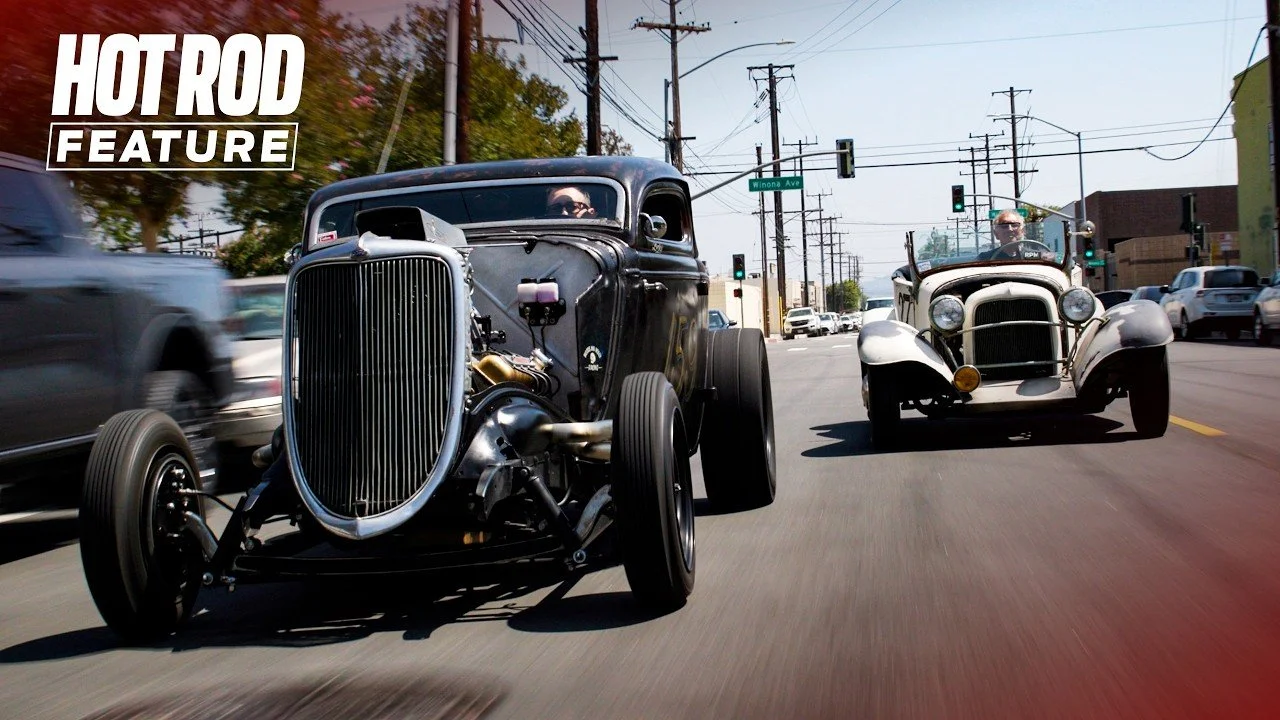
Simon Gluckman: "These cars not driven, to me, is a crime."
So sieht Leidenschaft aus.
Tony Thacker und Simon Gluckman für MotorTrend.
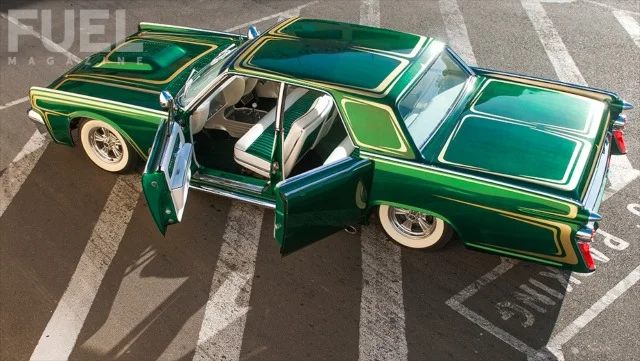
Fuel Magazine & Tank Moto
Long-term readers may know, that I am a die-hard fan of all that stuff Melbourne based Luke Ray is producing with his independent Australian publishing company: Fuel Magazine, Fuel Tank TV – and now: Tank Moto.
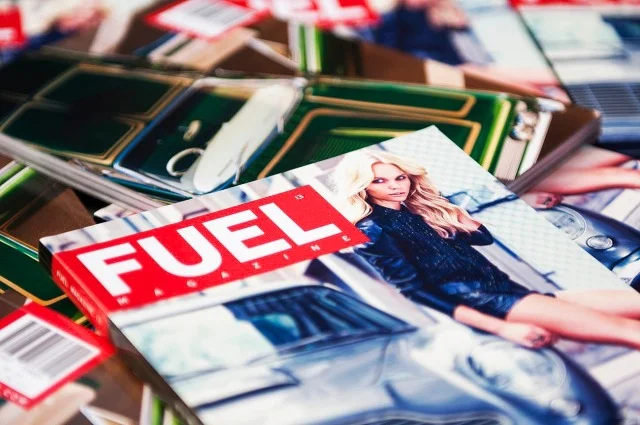
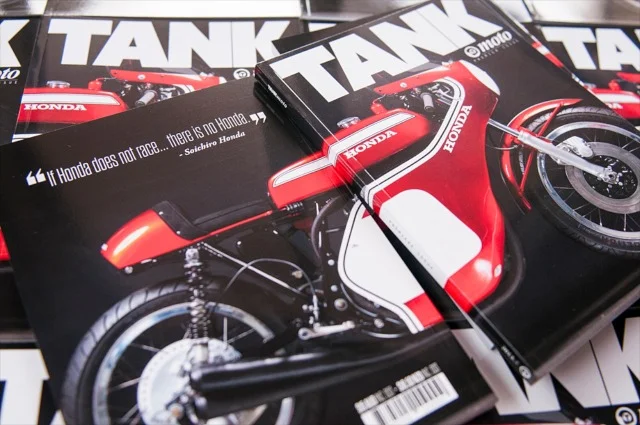
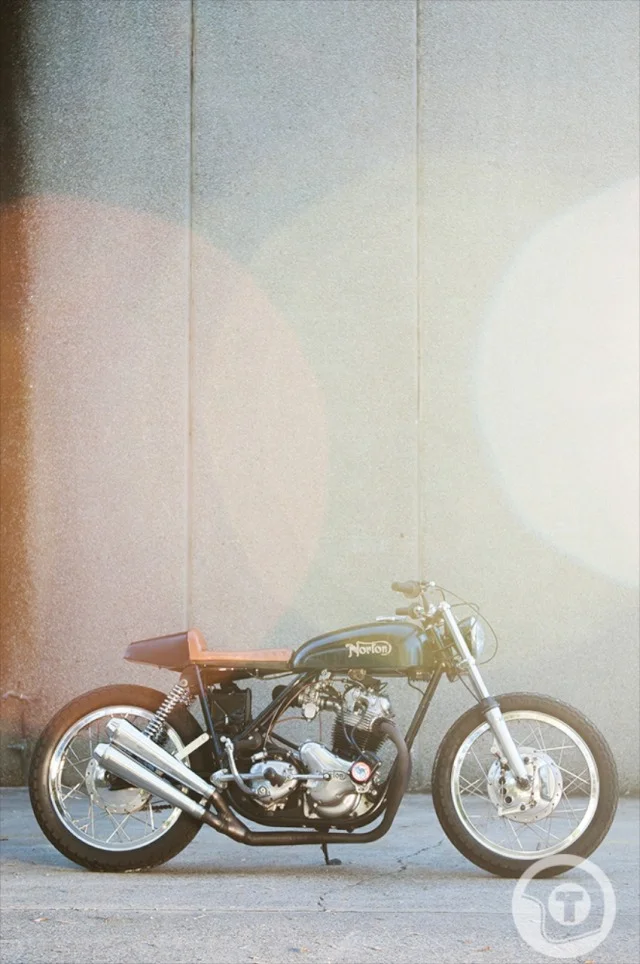
Long-term readers may know, that I am a die-hard fan of all that stuff Melbourne based Luke Ray is producing with his independent Australian publishing company: Fuel Magazine, Fuel Tank TV – and now: Tank Moto.
It would be easy to "copy & paste" his press release regarding Tank Moto. But it wouldn't live up to Luke's work. So — please do me a favor and hop over to Luke's site. You'll love it.
And once you are there, just click subscribe. You won't be sorry.

Style Deluxe: Bell Rock Rod
When Oliver Kaps told me the first time that he'll build a stretched Hot Rod, I was like: W-T-F. And I suppose everybody thought "W-T-F" as well. Beside Olli himself. He was always sure it would look awesome. Now, as the rod is finished, I know I was wrong. The car is a beauty. Although it has been stretched.


When Oliver Kaps told me the first time that he'll build a stretched Hot Rod, I was like: W-T-F. And I suppose everybody thought "W-T-F" as well. Beside Olli himself. He was always sure it would look awesome. Now, as the rod is finished, I know I was wrong. The car is a beauty. Although it has been stretched.
Mr. Kaps picked up a 1931 Chevrolet as a basis. And if you are familiar with the German TÜV, you'll know what it means to get such a monstrum street legal. Ok, it wasn't easy all the time, but Olli accomplished it. Chapeau!
The Bell Rock Rod was built for the Bell Rock Hotel (Rust Europar Park). You'll find a lot of details on Olli's site — just follow this link.
(Photos: Carlos Fernandez Laser)

Note to self: Get a Benzo Rod
I think it is obvious we have tremendous respect for the hot rod spirit. There is a simple reason for that: We are living in Germany. Well, on the one hand Deutschland has all its fingers in every pie regarding all worldwide highest desirable automotive brands – Audi, BMW (MINI, Rolls Royce), Mercedes-Benz, Porsche, Volkswagen (Bugatti, Bentley, Lamborghini) –, but if you think about a unique culture which is driven by passion and individuals … there is none. At least not if you compare it to the American hot rod culture, which started in the late 1930s.


I think it is obvious we have tremendous respect for the hot rod spirit. There is a simple reason for that: We are living in Germany. Well, on the one hand Deutschland has all its fingers in every pie regarding all worldwide highest desirable automotive brands – Audi, BMW (MINI, Rolls Royce), Mercedes-Benz, Porsche, Volkswagen (Bugatti, Bentley, Lamborghini) –, but if you think about a unique culture which is driven by passion and individuals … there is none. At least not if you compare it to the American hot rod culture, which started in the late 1930s.
Maybe we Germans are overall too square to respect people who modify their vehicles by themselves, maybe the creativity which is needed to build a car to one's wishes is not valuated that high. Not to mention the fact that the whole trailer-queen adoring and producing tuner society in Germany gets seriously derided for their work. For a good reason, btw, if you ask me – they should rather prove their competence by building street legal race cars instead of distorted plastic funfair sculptures.
Ok. I run off the track. In the early days of Chromjuwelen.com we featured a 1952 Mercedes-Benz W 191 170 Sb, which got rodded by Heiko Sude. At the Race 61 in Finowfurt we ran into Niko Kahn's chopped and channeled Mercedes-Benz W 189 300 d "Adenauer". In the meantime Ingo Recktenwald debuted with his 1939 Mercedes-Benz W 136 170 V. And a few days ago our friends form the excellent Stipistop presented us another Mercedes-Benz 170 S hot rod.
Enough already. I am hooked. I want a Mercedes-Benz hot rod. With a supercharged AMG M113 5.4 L "Hammer" V8. Or – even better – with a 7.3 L V12 SL 73 AMG V12. You think this would is blasphemy? No. It would not. This would be the perfect German Engineered hot rod.
(Please hit the images for additional information)
Deichkraft: Tri-Axle Two-Stroke Diesel Godzilla

I am not quite sure when I first have had heard of "Deichkraft", but it must be some years ago. A good friend of mine sent me a shaky video of a tri-axle Dimond T 980 N20 truck, which has been converted into a roadster. But it was not only the fact the basis of Deichkraft is a tri-axle truck which is for that reason alone kinda odd — the steampunked hot rod comes with a GM two-stroke diesel.
From that day on I wanted to meet Carsten Plötner, who is one of the blokes behind that project. Last weekend the moment has finally arrived — we met each other at a birthday celebration. I am sure all others guests were a little unhinged by us, because we chatted the entire time about cars, the narrowmindedness of some German hot rodders and possible Deichkraft destinations.
Carsten, what about bringing your little Chromjuwel to the Race 61 and Rust 'N' Roll? But before you do that I will pop in to have a ride!

Gotta Go
A couple of days ago I had the pleasure to meet Roger Miret. He gave a concert in Hamburg with his band Agnostic Front and visited his Rumblers C.C. Chapter Hamburg.


A couple of days ago I had the pleasure to meet Roger Miret. He gave a concert in Hamburg with his band Agnostic Front and visited his Rumblers C.C. Chapter Hamburg.
For a full story (written in German) just follow this link.
Rain ... er ... Race 61


Although we got warned in the forefront that it would pouring rain, we hit the road to Finowfurt in our 1972 General Tire International Harvester Scout II. Usually we came back with heavy sunburns from the Roadrunner's Race 61 – not so this year. What a bummer.
We snapped some photos with our cellphones. For some more photos just click on one of the images – or follow this link.
SEMA Show 2010: Sneak Preview


Yes. We are still alive. We are back from our overseas trip and brought along a ton of material — SEMA Show 2010, Lucas Oil Off Road Race, OPTIMA Ultimate Street Car Invitational, West Coast Customs (Los Angeles) — which wants to get chopped. Aside from that we visited the Las Vegas Motor Speedway for some oval track sports and dragracing and finally paid Rinkens a visit.
I bet it will not get boring the next days. Stay tuned.